What's different at 7,000 feet
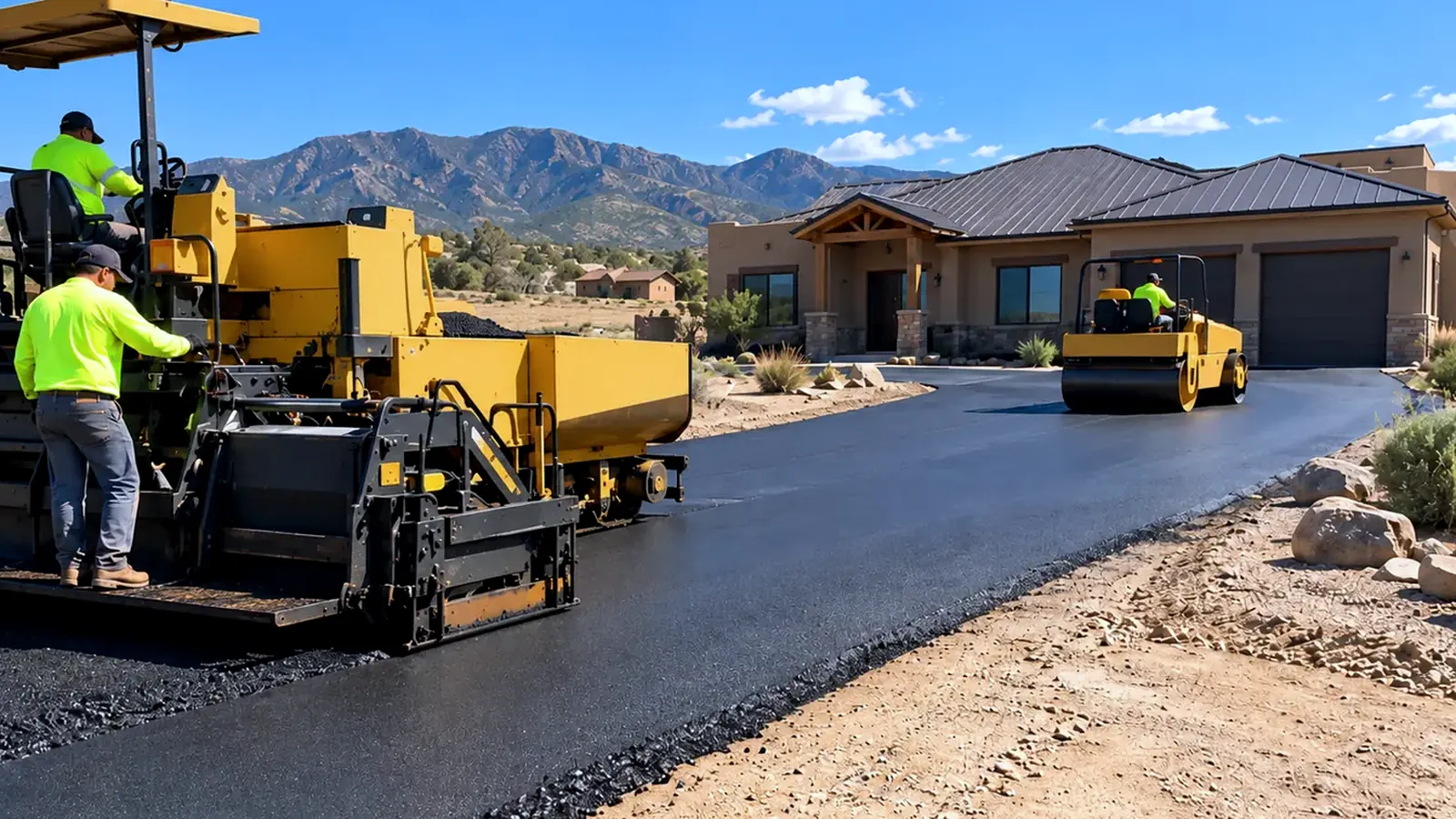
Sandia Park sits on the east side of the Sandias, roughly 6,500 to 7,500 feet up, among ponderosa, piñon and juniper. The ground is decomposed granite, rock and forest soil. Winters bring snow and nights well below freezing; summers bring short, heavy monsoon storms that send water racing downhill. Driveways here fail at the edges, on the steep stretches and wherever water crosses them.
Freeze and thaw
Water in the base freezes, expands and lifts the pavement. Good drainage and a dense, compacted base keep water out.
Runoff
Storm water off the slope above cuts edges and undermines the base. We plan swales and culverts before we pave.
Slope
Steep runs need a firmer base and careful compaction so the asphalt doesn't shove or crack.
Trees and roots
Roots and forest duff come out of the driveway footprint. Left in, they rot and leave soft spots.
How we build it
- Walk the site. Grade, curves, where the plow goes, where water comes from and where it can go.
- Clear and excavate. Roots, duff, loose rock and soft soil out.
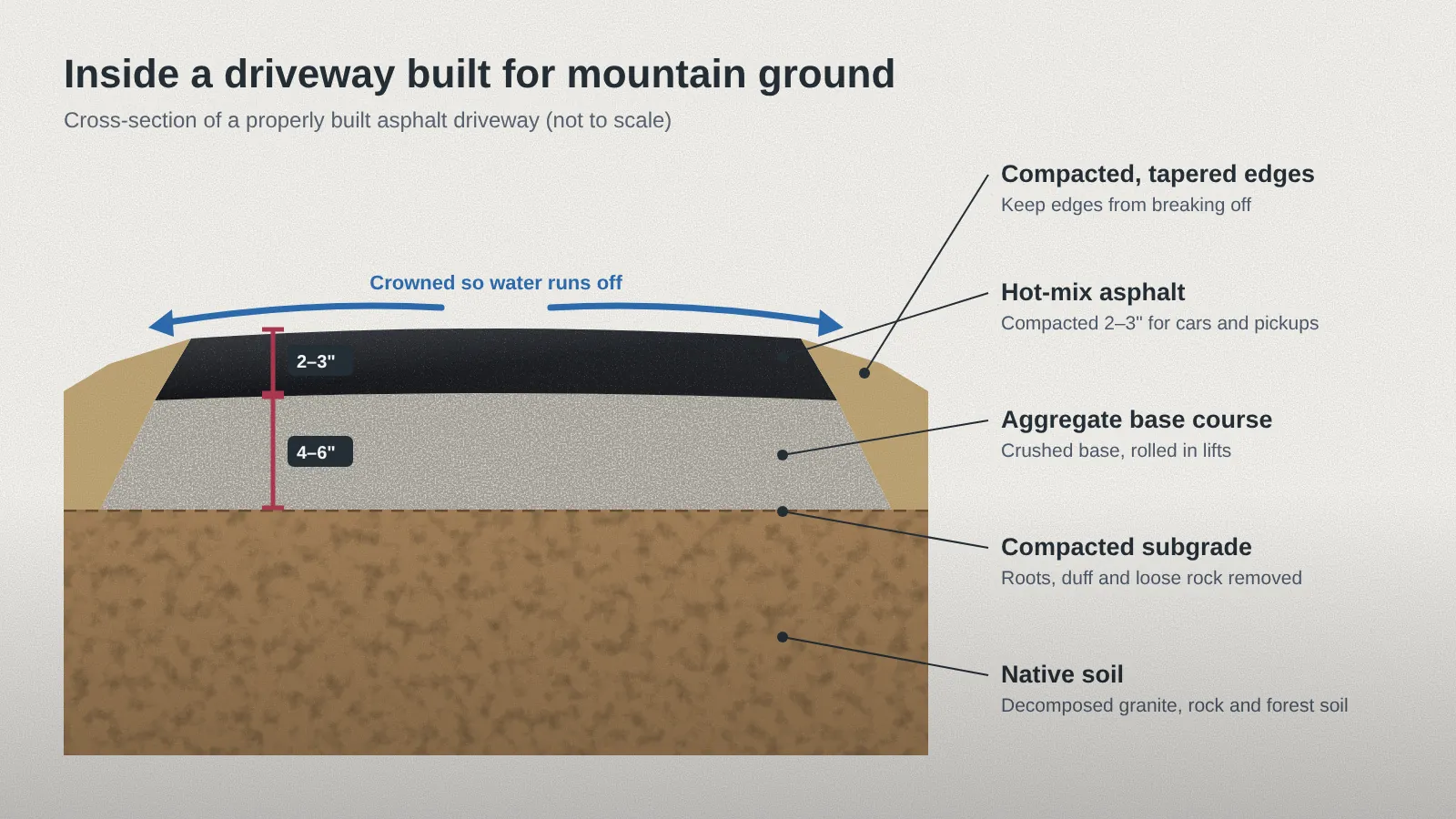
- Shape for water. Cross-slope or crown, plus swales, culverts and rock where needed.
- Compacted base. Crushed aggregate placed and rolled in lifts — typically 4–6 inches, more on steep or soft sections.
- Hot-mix asphalt. Usually 2–3 inches compacted for homes.
- Edges. Tapered, compacted edges backed with material so they don't break off.
Short season, plan ahead
Asphalt needs warm ground and warm air to compact properly. Up here the paving season is shorter than in Albuquerque — roughly late spring through early fall, depending on the year. Calling early in the year gets you on the schedule.
Call (505) 578-7882 for a free site visit. Ballpark numbers are in our Sandia Park cost guide.
Questions we get
How thick should a mountain driveway be?
Most homes get 4–6 inches of compacted base and 2–3 inches of compacted asphalt. Steep runs, soft spots and heavy trucks call for more.
Can you pave in winter?
Not well. Asphalt needs warm temperatures to compact, so mountain paving runs roughly late spring to early fall.
How long will it last?
With a good base, drainage and regular sealcoating, 20 years or more is common.
Do I need a permit?
Paving on private property usually doesn't. A new connection to a county road or state highway may need one. We'll check.