What happens to an open crack in winter
Snowmelt runs into the crack. At night it freezes and expands, prying the crack wider and lifting the edges. Repeat that dozens of times a winter and the crack turns into broken pavement and then a pothole. Water that reaches the base softens it in spring.
How we seal
- Clean out needles, sand and vegetation; blow dry.
- Rout where needed for a better seal.
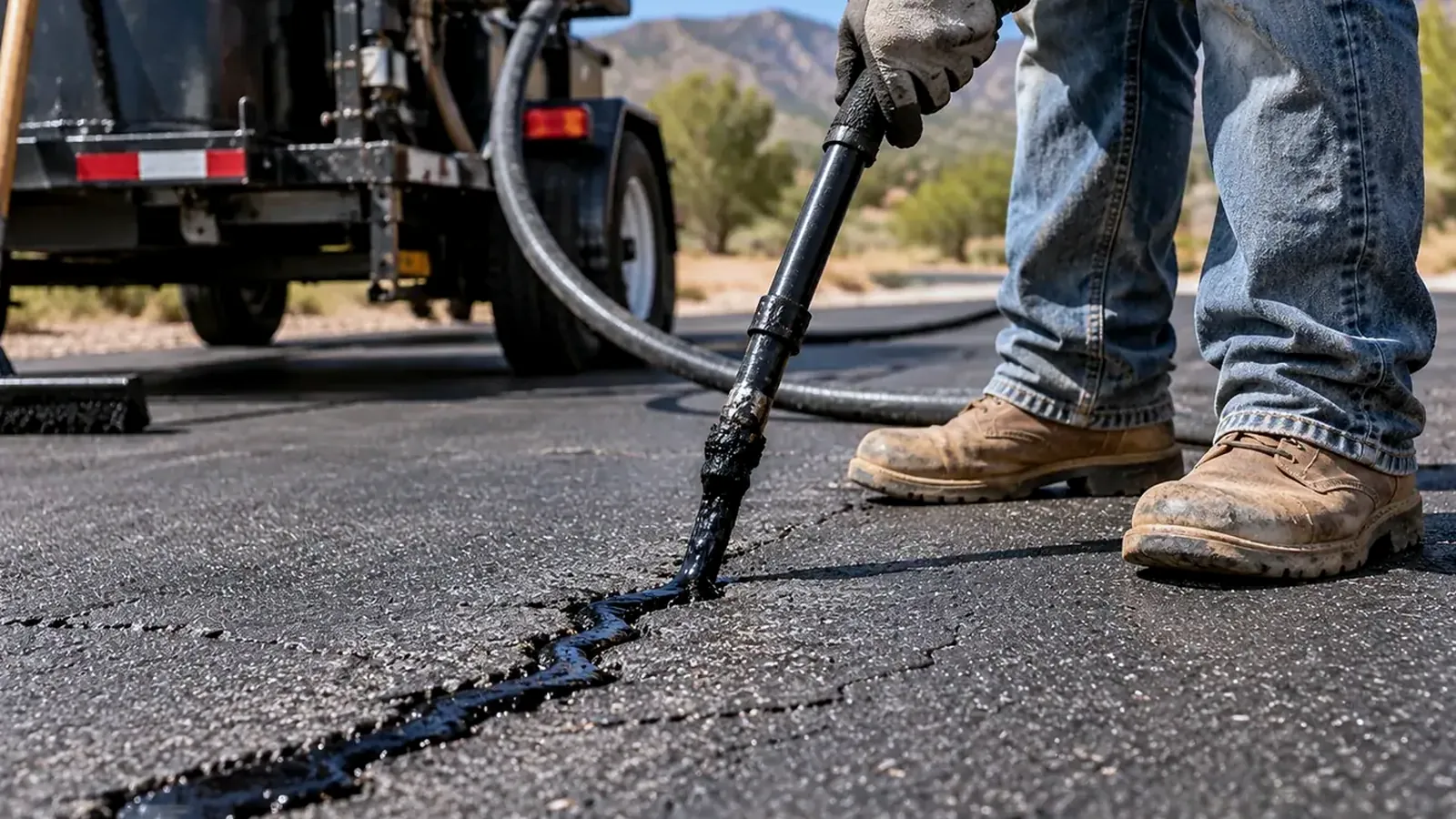
- Hot-pour rubberized sealant that stays flexible in cold weather.
- Finish flush or with a narrow band.
Good for
Individual cracks along edges, seams, joints and across the drive.
Not enough for
Spiderweb cracking, heaved or sunken areas and potholes — those need repair.
Best done before winter, in late summer or early fall, so cracks are sealed before the freeze-thaw season.
Questions we get
When should I seal cracks?
Late summer or early fall, before freezing weather starts.
Will sealant hold up to snowplows?
Hot-pour sealant is flexible and sits flush or slightly banded, so a raised or rubber-edged blade passes over it.
Is DIY filler good enough?
It helps briefly, but often shrinks or pops out after a winter.