What runoff does
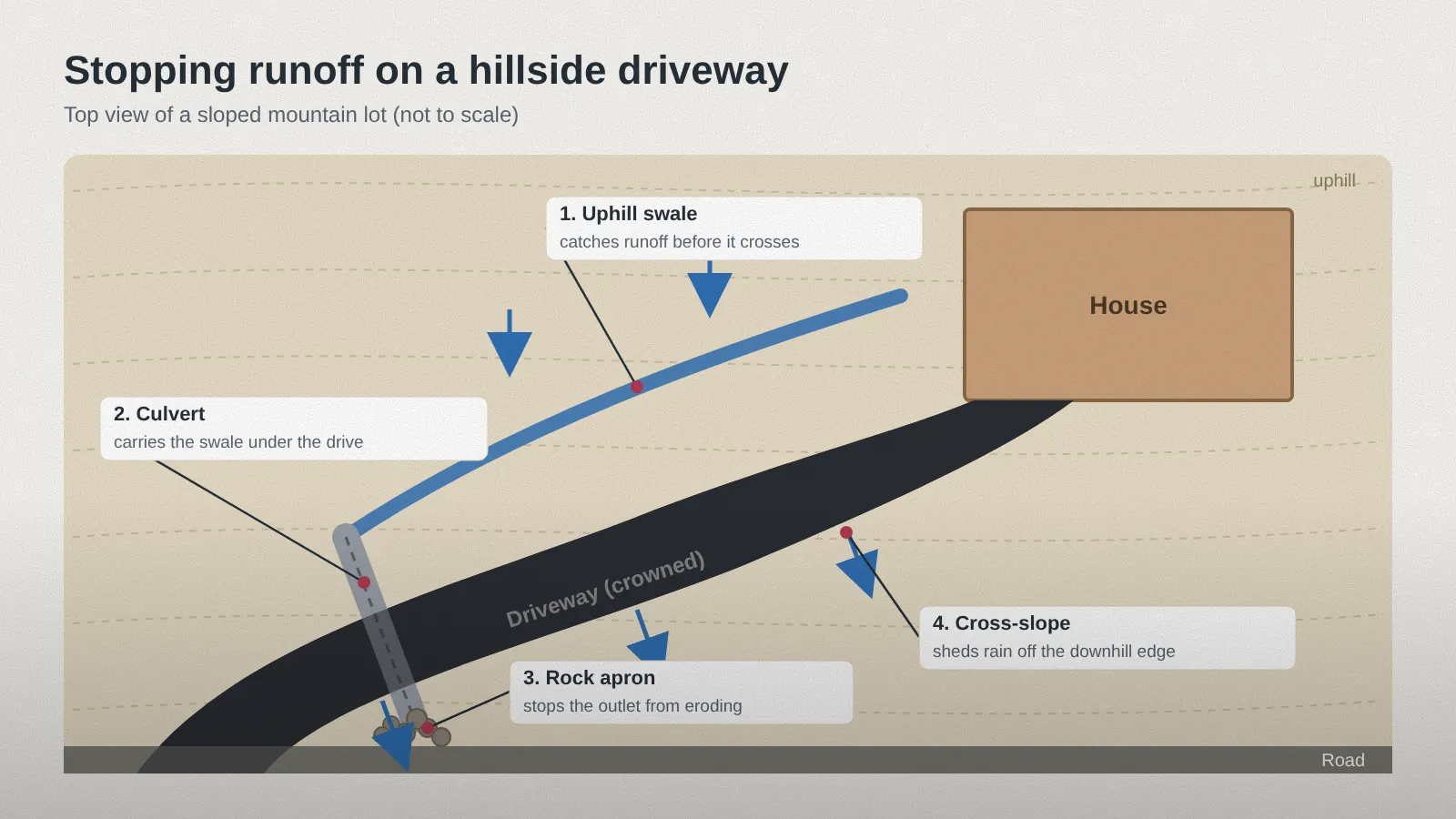
A summer storm in the East Mountains can drop a lot of rain fast. On sloped lots that water comes off the hill above, crosses or runs down the driveway, and carries sand and gravel with it. Over time it cuts the edges, washes out the base and leaves ruts or holes. Snowmelt does the same thing more slowly, with freezing added.
What we build
Uphill swales
Shallow channels that catch water before it reaches the drive and lead it somewhere safe.
Culverts
Pipes under the driveway at natural low points and crossings, sized for the flow and properly bedded.
Rock armor
Rip-rap at culvert outlets and in steep channels so water doesn't carve new gullies.
Cross-slope and berms
Shaping that sheds water off the downhill edge, or guides it to an outlet on long grades.
Culvert crossings done right
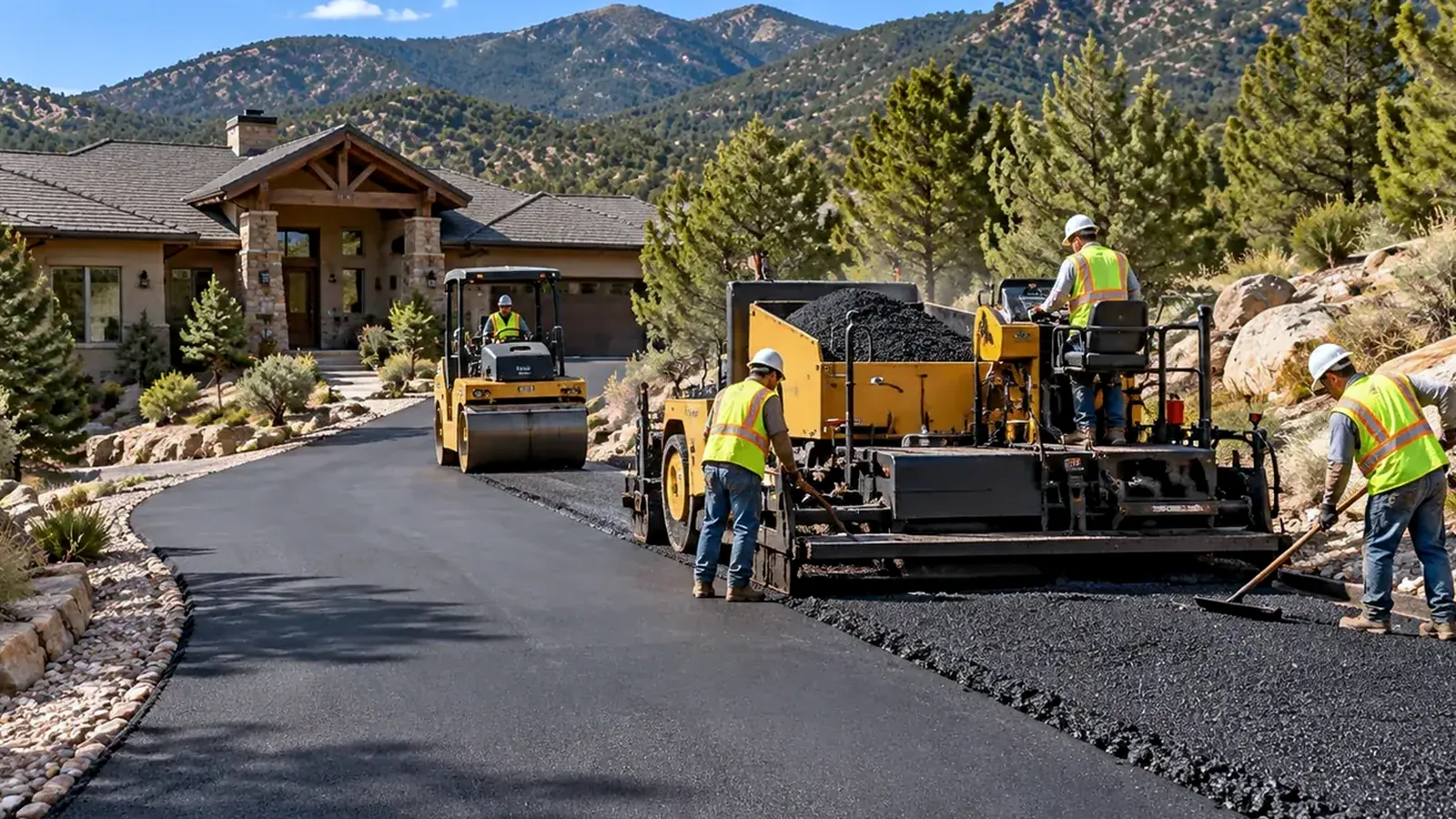
The fill over a culvert has to be compacted in thin layers. When it isn't, it settles, and the pavement above dips and cracks. We also protect both ends so water can't cut around the pipe.
If your drive crosses an established drainage or arroyo, there may be county rules about what you can do there. We'll help you check first.
Questions we get
My driveway washes out every monsoon. Can that be fixed?
Usually. It's typically an uphill swale, a culvert or two, and rock where the water leaves.
Why is my driveway sinking over the culvert?
The fill around the pipe wasn't compacted in layers and has settled.
Do you do drainage without paving?
Yes — sometimes drainage alone is what a gravel drive needs.