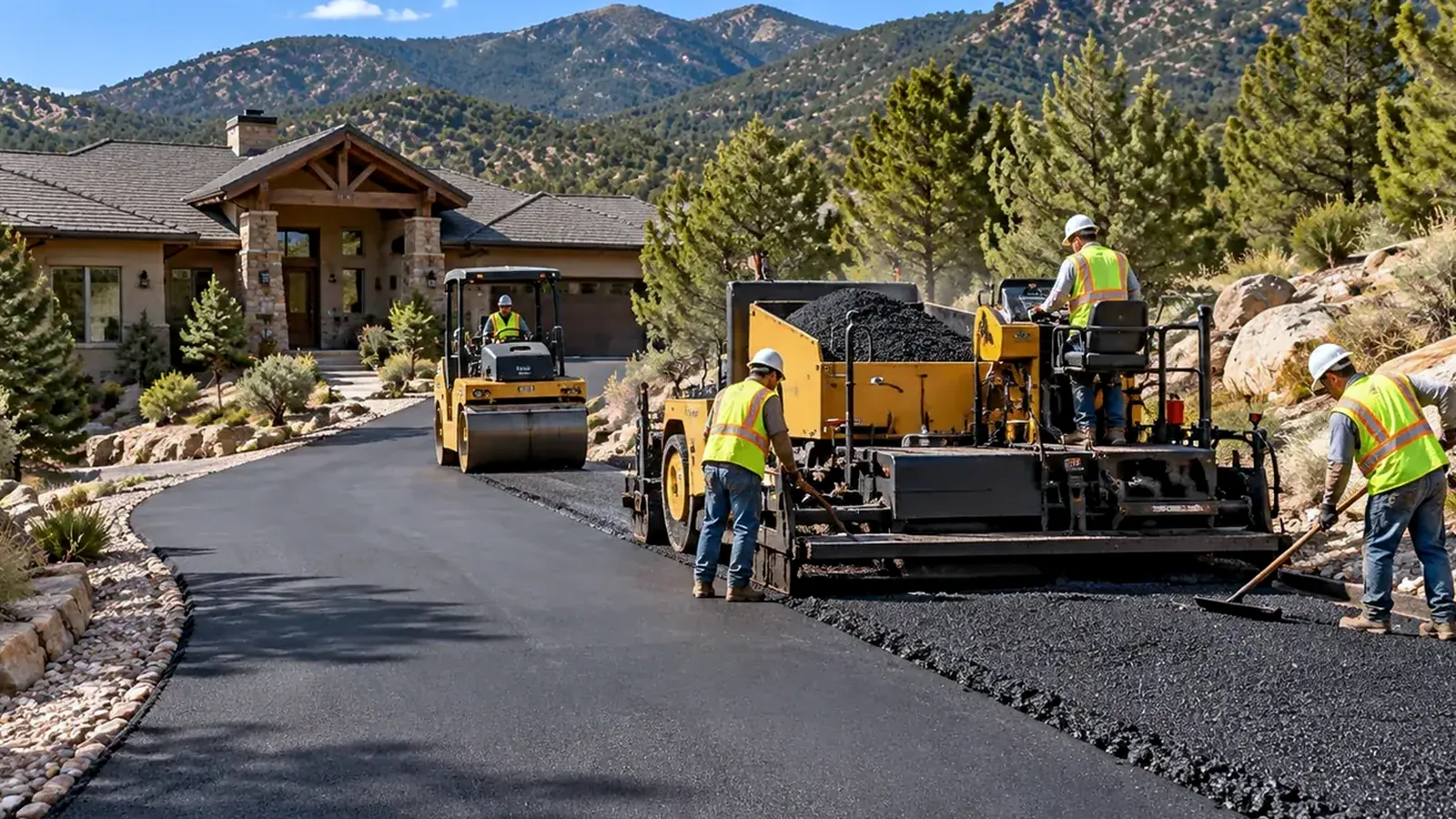
Why steep driveways are harder
- Compaction. Rollers have less traction on a slope, and hot-mix wants to slide downhill. Crews have to work the grade carefully.
- Water speed. Rain and snowmelt run faster on a steep drive and carry more force at the bottom and around curves.
- Turning and braking. Tires scrub and push the surface at curves and at the top and bottom of the grade.
- Winter. Ice on a steep drive is dangerous. Surface texture, drainage and plowing all matter more.
How we approach it
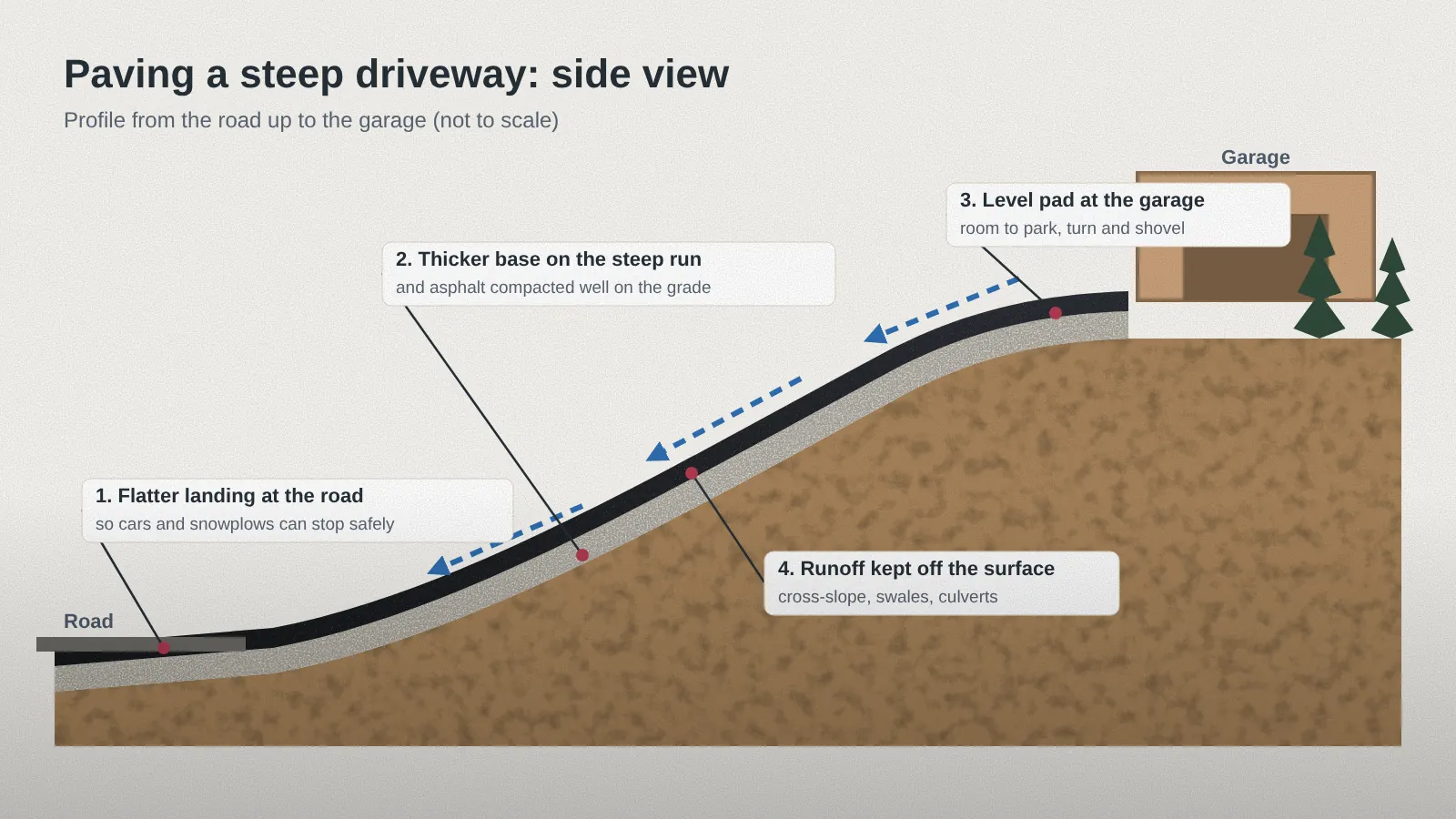
- Look at the profile. Where the grade is steepest, where it changes, and whether landings at the road and the garage can be flattened.
- Stronger base on the steep runs and at curves.
- Control the water with cross-slope, swales and culverts so it leaves the surface before it picks up speed.
- Pave uphill in a sequence that lets the crew compact properly.
- Finish the transitions smoothly so trailers and low cars don't scrape.
When asphalt isn't the best answer
On very steep sections, asphalt gets hard to place and compact well. For some short, very steep pitches, concrete with a broom finish or a different layout may be the better choice. We'll tell you if we think so. See how steep is too steep.
Questions we get
How steep can you pave asphalt?
Most residential driveways pave fine up to the low teens in percent grade. Steeper sections can be done but get harder; very steep pitches may suit concrete better.
Will a steep asphalt driveway be slippery in winter?
Asphalt has decent texture, and good drainage keeps water from sitting and freezing. Sand helps on icy days.
Can you flatten the bottom of my driveway?
Often, yes — a flatter landing at the road is one of the best improvements on a steep drive.