The typical Cedar Crest climb
Leave NM-14, turn onto a short apron, and the drive heads straight up the hillside or switches back through the trees. Gravel on these grades never lasts — every storm moves it downhill. Old asphalt cracks at the curves and breaks off at the edges where runoff cuts underneath.
What makes it last
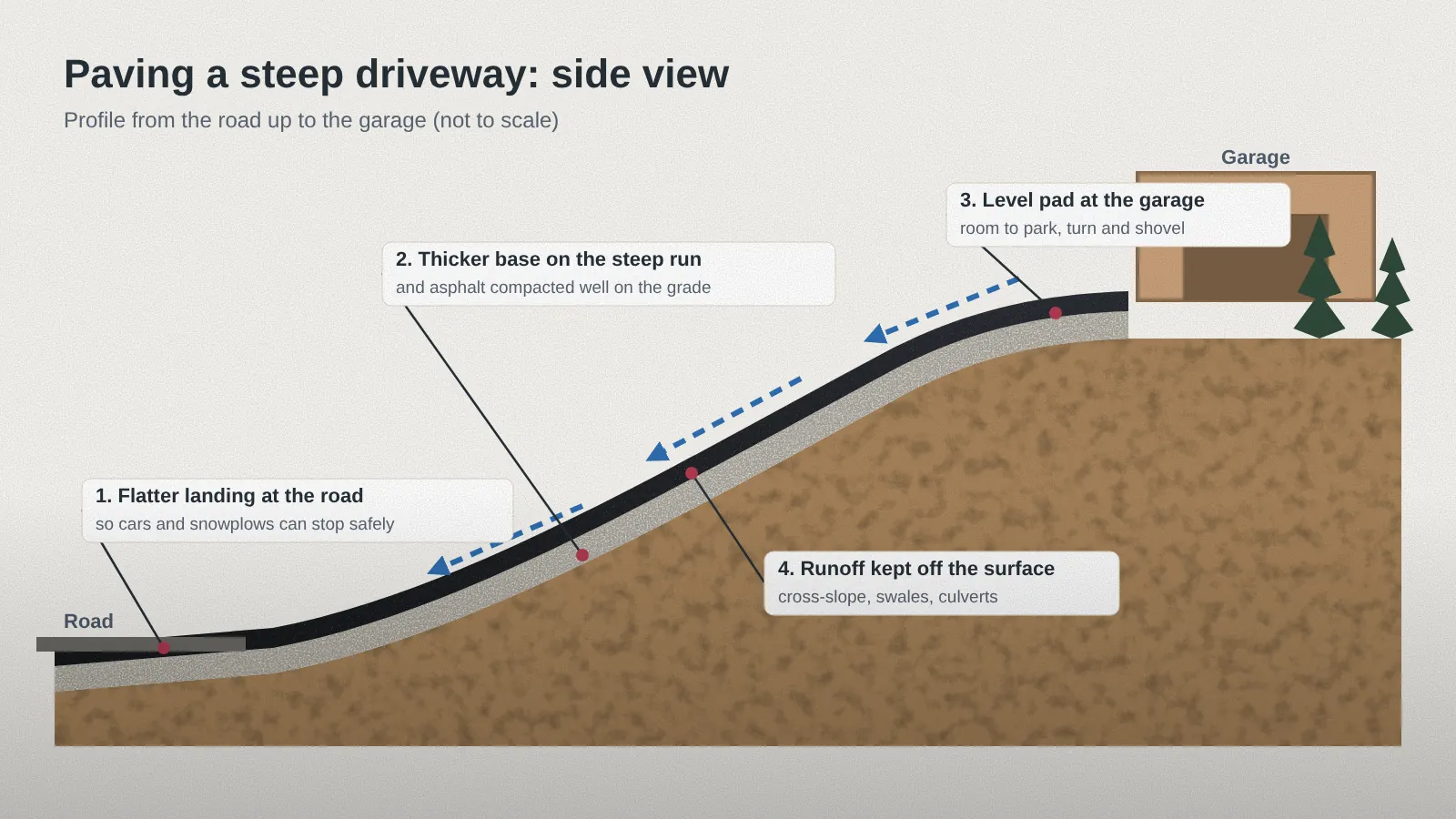
A landing at the bottom
A flatter section at the highway so you can stop, look and pull out without sliding.
A strong base on the climb
Extra crushed base where the grade is steepest and at every curve.
Water off early
Cross-slope and swales so storm water leaves the pavement before it gathers speed.
Supported edges
Backfilled, compacted shoulders on the downhill side.
The paving itself
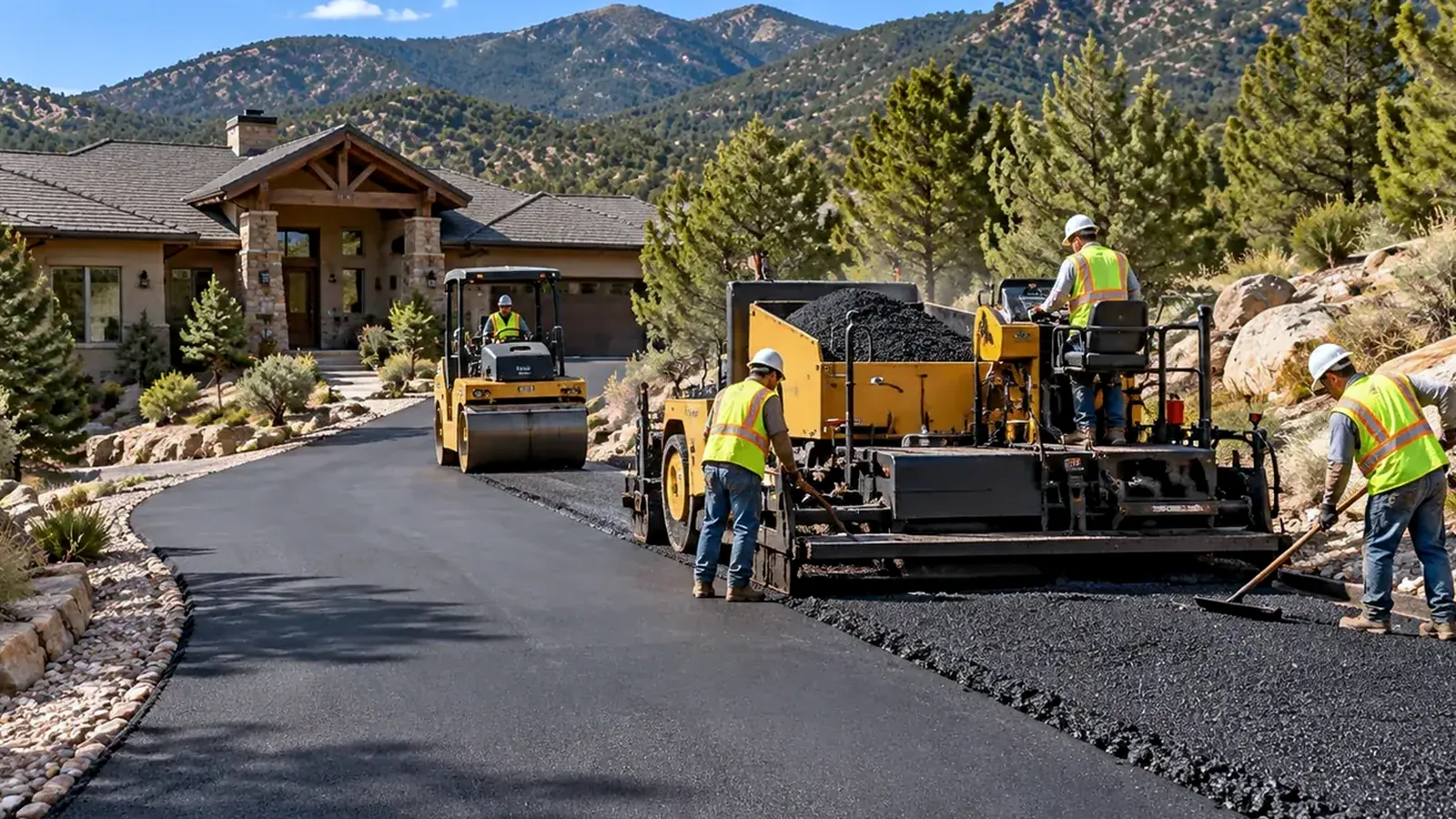
Steep grades are paved working uphill, with the roller following close behind while the mix is hot. Joints are kept out of the wheel paths where possible, and curves get extra attention because tires scrub there.
When we suggest something else
If one pitch is extremely steep, we may suggest concrete for that section or reshaping the layout. See how steep is too steep.
Call (505) 578-7882 for a free site walk in Cedar Crest.
Questions we get
Will asphalt slide on a steep driveway?
Not when the base is firm and the mix is compacted properly while hot.
Can you fix my washed-out edges at the same time?
Yes — edges and drainage are part of the job.
How long does it take?
Most driveways take one to three days, depending on base work and length.