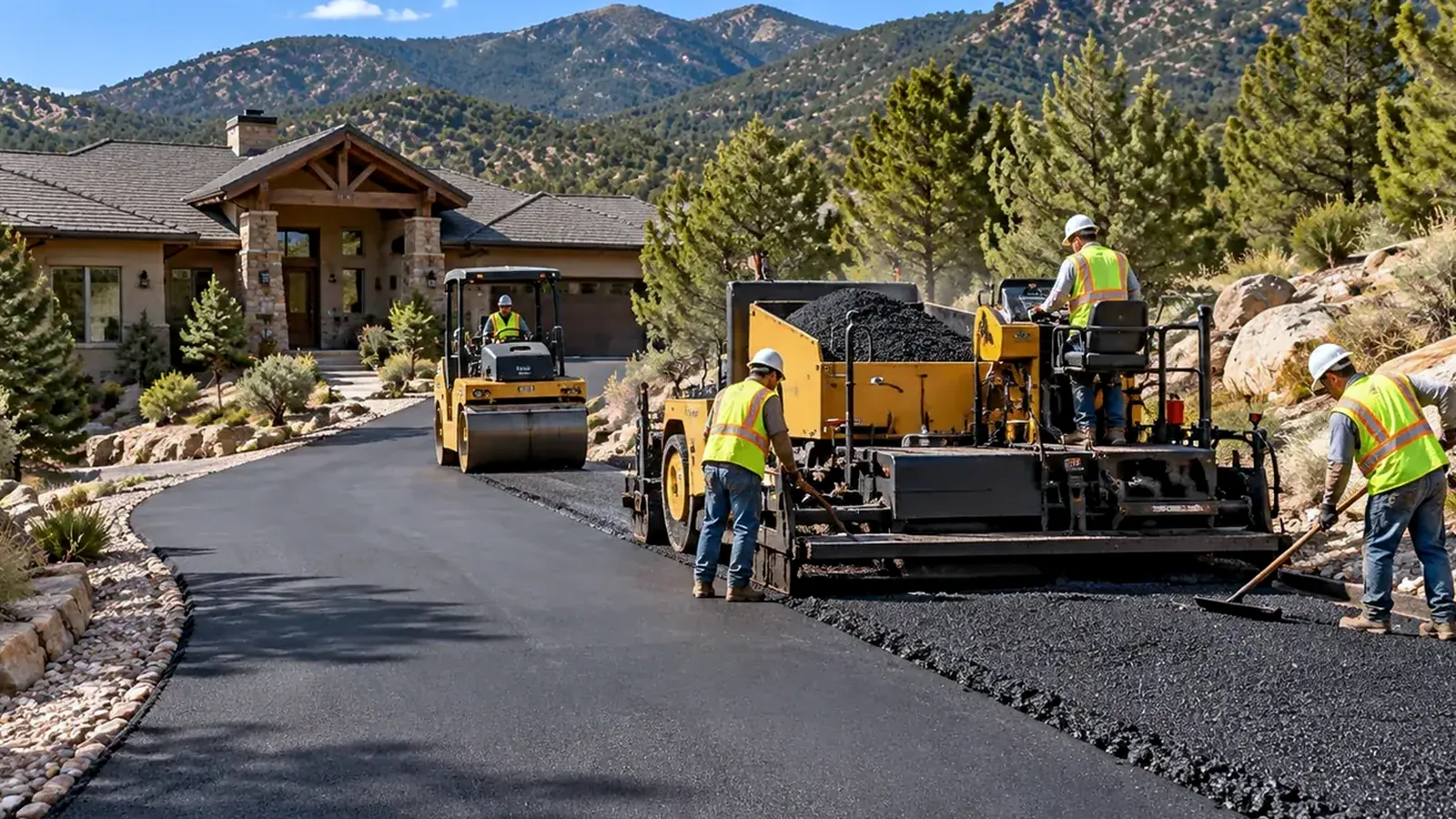
The steps
| Step | Typical time |
|---|---|
| Site visit and written quote | Within days of your call |
| Scheduling | Often 1–4 weeks, depending on season |
| Clearing and rough grading | 1–2 days |
| Drainage: culverts, swales, rock | 1–2 days |
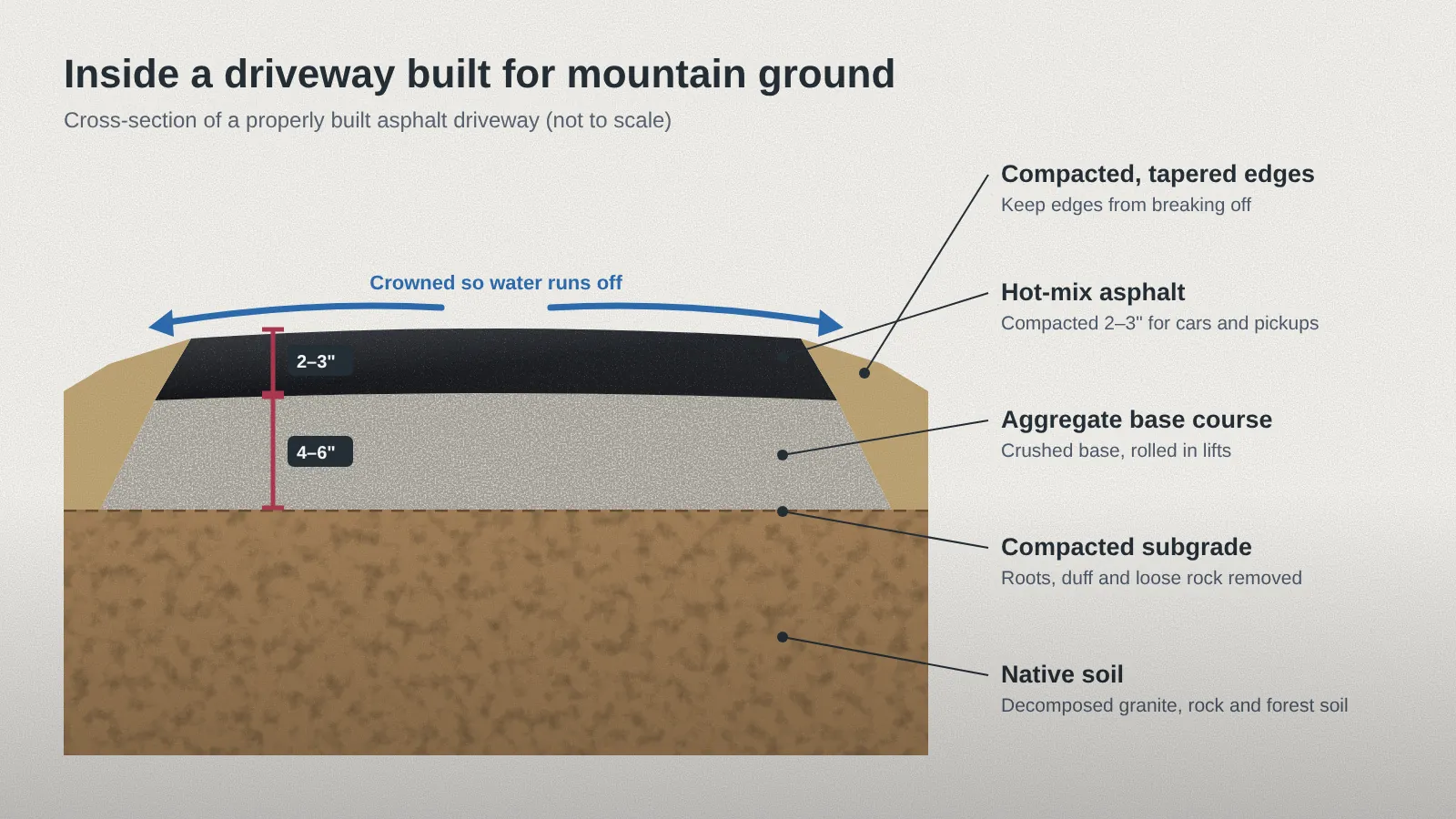
| Base placement and compaction | 1–3 days |
| Paving | Usually 1 day for a typical drive |
| Cure before normal driving | About 2–3 days; months to fully cure |
Long, steep or rocky drives take longer. Granite outcrops, tree roots and soft spots found during grading can add time.
Why the ground work matters most
In the East Mountains, driveways fail from water and weak base far more often than from the asphalt itself. Steep grades send storm water racing downhill; snowmelt soaks in and freezes. That's why most of the job is grading, drainage and base. See runoff and drainage and steep driveways.
Paving day
- Final grade check and tack coat at edges and transitions
- Hot asphalt placed with a paver or by hand on tight spots
- Rolled while hot for density
- Edges shaped and backfilled
- Barricades set; you get care instructions
Season matters
Asphalt plants and good paving weather run from spring to fall up here. Cold nights limit late-season paving at higher elevations, so it's worth calling early in the year. Grading and drainage can sometimes be done ahead of paving.
After it's done
Keep heavy trucks off for a couple of weeks, avoid turning wheels in place while it's soft, and plan the first sealcoat after about a year. See snow plowing and asphalt before the first snow, and our cost guide for pricing. Call (505) 578-7882 to start.
Questions we get
Do I need to be home on paving day?
Not necessarily, but be reachable and make sure vehicles are out of the way the night before.
Can you pave in winter?
Rarely at this elevation. Spring through fall is the paving season; dirt work can sometimes happen earlier.
What if you hit rock while grading?
We'll show you the options and any price change before going further.